Key Takeaways:
- Your expertise may feel ordinary to you, but it can answer questions your customers struggle with.
- Move from observation to discovery. Investigate what you notice, check the evidence, and publish what you found.
- Useful discoveries can be local or specialized. Explain their scope, methods, and limitations honestly.
- SEO connects your knowledge with customer searches. Choose relevant questions, use familiar language, and link helpful resources to your services.
- Make your findings easy to understand and reference. Include clear explanations, supporting evidence, author information, and dates.
- Measure qualified inquiries alongside visibility. Original content can create opportunities for links and AI citations, but neither is guaranteed.
Your Next Customers Could Find You Through Knowledge You Haven’t Shared
Your next 57 leads could start with something you haven’t published because you assume everyone already knows it.
Why 57? There’s no forecast behind that number. The point is that your next group of customers could discover your business through knowledge you already have but haven’t shared.
You explain something to a customer and think, “Everyone knows that.”
But everyone doesn’t.
You learned it through years of fixing problems, answering questions, testing approaches, and discovering why things fail. You’ve seen the exceptions. You know which questions people should ask before spending money.
Now that knowledge feels ordinary to you.
To someone facing that problem for the first time, it could be the most useful thing they read all week.
That creates an opportunity for your website—and your SEO.
And we’ve seen this over the years – business owners share unique original knowledge or data only they have, capitalize on it, and results follow. It’s only natural.
As AI Changes Search, Give People Something Worth Finding
In our article about how to get your business found in AI search, we discussed how customers increasingly encounter answers through tools such as Google’s AI Overviews and ChatGPT.
That raises a practical question: What can your business publish that makes it a useful source for those answers?
DataForSEO’s October 2026 Search Insider reporr illustrates the changing environment. In its tracked keyword panel, AI Overviews appeared in 61.43% of analyzed search results in August 2026, up from 5.93% in September 2024.
In a separate quarterly analysis, AI Overviews appeared for 70.44% of informational queries and 51.35% of commercial queries during the observed portion of Q3 2026.
Those figures describe the report’s samples, primarily focused on US, English-language search. They aren’t percentages of every Google search. But they show why business owners should pay attention to how their expertise appears online.
Publishing another general explanation may add little when hundreds of pages already offer essentially the same answer.
Your business can contribute something else:
information drawn from work you actually performed.
Google’s own guidance for succeeding in AI search encourages original, valuable content. For a small business, that originality may already exist in service records, project notes, customer questions, and the heads of experienced employees.
AI Can Help You Write. Your Work Supplies the Discovery.
There’s a broader reason to value firsthand information.
Researchers have documented a risk called “model collapse,” where indiscriminate training on recursively generated data causes models to lose information about the original data distribution. That research, published in Nature, concerns model training. It doesn’t establish how a live AI search tool chooses which business to cite.
Still, it reinforces the value of preserving information grounded in the real world.
Your business encounters things that haven’t necessarily been documented online: a recurring problem with a particular installation, an unexpected source of project delays, or a condition under which familiar advice fails.
AI can help organize an interview or clarify an explanation. Your experience and records supply the evidence.
Move From “We See This All the Time” to “We Discovered That”
“We see this all the time” is a useful starting point.
“We discovered that…” gives someone a reason to keep reading—and potentially reference your finding.
The bridge between those statements is investigation.
Consider this hypothetical example:
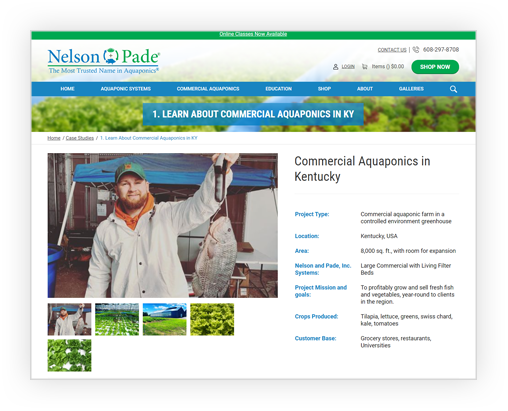
An equipment repair company notices that customers sometimes request replacement quotes for equipment that might be repairable.
The company could publish a general article titled “Should You Repair or Replace Your Equipment?”
Or it could investigate its own experience:
- Observation: Customers sometimes assume replacement is necessary.
- Question: How often do our second-opinion visits identify a viable repair?
- Investigation: Review completed visits over a defined period, using a consistent definition of “viable repair.”
- Discovery: Publish what the review found, including the number of cases, equipment types, and limitations.
The result might support a more specific article: “What Our Second-Opinion Service Calls Revealed About Repair vs. Replacement.”
The finding must come from the records. You can’t decide what you want the headline to say and manufacture evidence to fit it.
You also don’t need to discover something new to the entire world. A documented finding about a particular service area, product, or operating condition can help someone make a better decision.
Specific and defensible is useful.
Where Useful Discoveries Hide in Your Business
You probably don’t need a research department. Start by asking your team where experience has taught them something customers don’t know.
| What your business encounters | What you could investigate |
|---|---|
| Projects that take longer than expected | Which stages caused delays in completed projects? |
| Products that perform differently locally | What do your documented installations reveal about local conditions? |
| Customers repeatedly buying the wrong option | What information would have helped them choose correctly? |
| Recurring repairs or service calls | Which causes appeared most often in your records? |
| Advice that doesn’t always hold up | Under what conditions did it fail? |
| Unexpectedly successful outcomes | What changed, and what evidence supports the explanation? |
Interview the people closest to the work. Ask:
- What do you explain to customers every week?
- What surprises people after they hire us?
- What do experienced employees notice that beginners miss?
- What have we changed our minds about?
- What do we suspect is true that we could check?
- What have we discovered that would save someone time, money, or frustration?
That last question can uncover an excellent article.
Connect Your Discovery to What Customers Search For
A discovery becomes more useful to your marketing when it answers a question relevant to your customers.
This is where SEO strategy comes in.
An owner may describe a problem using industry terminology. Customers may search for its symptoms, costs, or consequences.
Your team might discuss “premature component failure.” A customer might ask, “Why does this part keep breaking?”
SEO research helps connect those two perspectives. It can help identify:
- The questions prospective customers ask.
- The language they use.
- Whether a topic relates to services you provide.
- The type of page that would best answer the question.
- Existing pages that should link to the new resource.
A finding might belong in a research article, a case study, a buying guide, or an improved service page.
For example, a contractor’s analysis of project delays could support a planning guide. That guide could link to the relevant service page and explain when a reader should involve a professional.
Your expertise supplies the substance. SEO helps connect it with the people looking for answers.
Publish Evidence Someone Can Trust and Reference
A useful finding needs enough context for a reader to understand what it means.
Include these details where relevant:
- The question. What were you trying to understand?
- The finding. What did you discover? Explain it directly.
- The evidence. Show the records, measurements, photographs, or documented cases supporting it.
- The method. Explain how you selected and reviewed the information.
- The scope. Include the timeframe, location, sample size, and relevant definitions.
- The limitations. State what your findings don’t establish.
- The source. Identify the author and their relevant experience.
A simple table or original chart can make a pattern easier to understand. Keep the explanation and supporting details together on a stable page that people can reference.
Be clear about the difference between measurement and professional judgment.
“In the service calls we reviewed…” describes a bounded set of evidence.
“In our experience…” introduces an expert observation.
Both can be useful. They should be presented accurately.
Good technical SEO also matters. The page needs to be accessible, clearly organized, and connected to the rest of your website through relevant internal links. Useful evidence and sound implementation work together.
How One Discovery Can Support Your SEO
Publishing original findings creates several potential opportunities.
- It can answer specific customer searches. A detailed finding may address a question that broad articles leave unanswered.
- It can give other websites something worth referencing. Writers, trade publications, local organizations, and industry resources need credible evidence. A clearly documented finding gives them a reason to link to its source.
- It can demonstrate your judgment before someone contacts you. Readers can see how you investigate a problem and explain the result.
- It can supply material for other channels. One investigation might support a video, an email, a sales conversation, and several useful social posts.
- It can create opportunities for AI citations. An accessible, relevant source may be referenced in an AI answer. Originality alone doesn’t guarantee that outcome.
Measure the business value alongside visibility. Watch relevant search impressions, visits, earned links, inquiries, and lead quality.
Ask new customers how they found you and which resources helped them. A page that attracts the right inquiries may be more valuable than one that attracts a large, unrelated audience.
“But If We Share This, Why Would Anyone Hire Us?”
Because useful information lets customers see your expertise in action.
Explaining why a problem happens doesn’t necessarily give someone the time, equipment, experience, or desire to solve it themselves.
It may help them recognize the problem sooner, ask better questions, or understand why professional help is worthwhile.
A manufacturer can explain selection mistakes without publishing proprietary designs. A contractor can document recurring problems without revealing customer information. A professional service firm can share aggregated patterns while protecting confidential records.
You can share enough to help people make better decisions while protecting information that needs to remain private.
The goal is to make your judgment visible.
Make Your Knowledge Part of Your SEO Strategy
Your website can do more than list services and say you’re experienced.
It can demonstrate what that experience has taught you.
Start with one question your business can answer unusually well. Review the evidence. Identify what you discovered. Then publish a resource that helps someone understand the issue and decide what to do next.
An ongoing SEO strategy can help you choose relevant topics, connect those resources to your services, improve their discoverability, and measure the response over time.
Explore Webstix’s SEO Care Plans if you’d like help developing that strategy.
Your business may already hold the evidence for a useful discovery. Investigate it, document it, and publish something others can reference.
What does your business know that your website hasn’t shared? Talk with Webstix about making that knowledge part of your SEO strategy.